Data Center
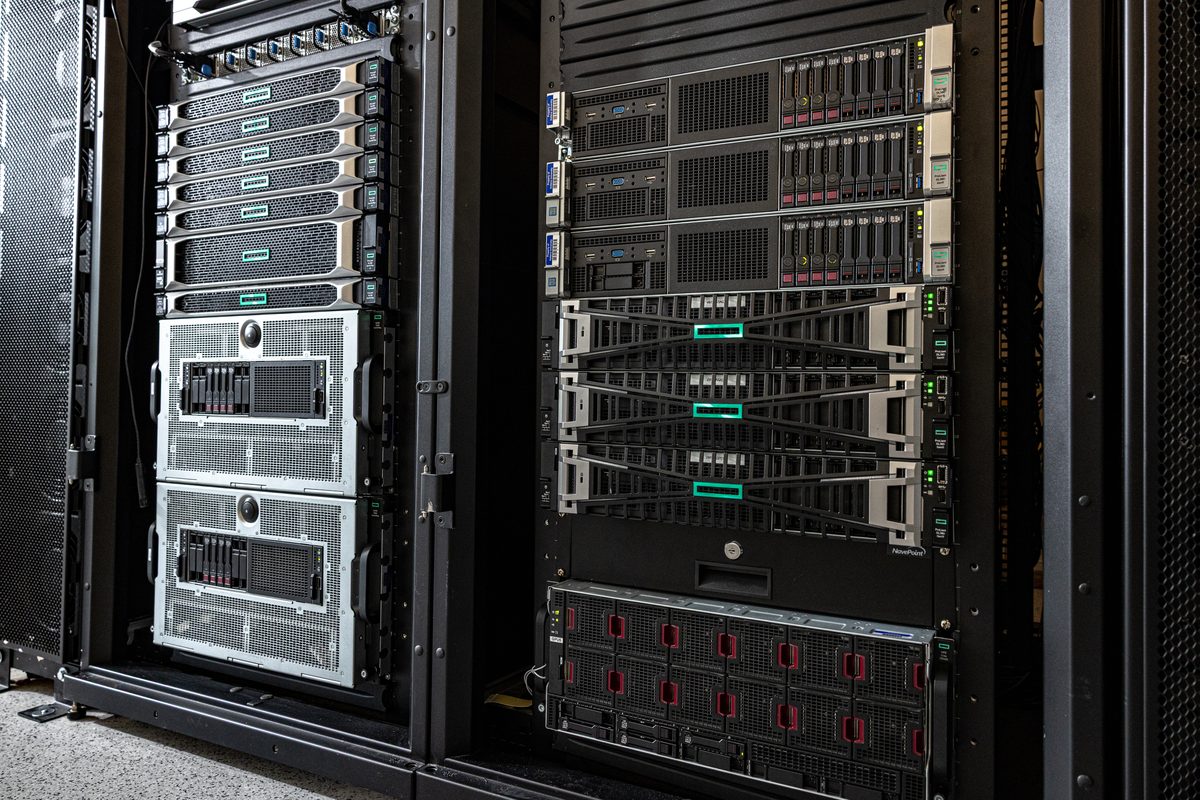
The SIC Data Center, in room 122 of the Science and Innovation Center, is where the Department of Computer Science and the Fred DeMatteis School of Engineering and Applied Science run their most powerful computing. It houses the department’s academic computing cloud infrastructure, which gives courses, research and student projects their own virtual machines; the Star high-performance computing (HPC) cluster, with 38 NVIDIA data-center GPUs; the department’s infrastructure services; and faculty research servers. The Data Center was built as a visible space: visitors can see the server racks through its glass wall.
Research & Teaching
Virtual machines for courses and research. The academic computing cloud provides virtual machines for many courses, including software engineering, operating systems, machine learning, data science, web application development, databases and networking. Faculty request course VMs as needed. Faculty and student researchers also run their research in virtual machines of their own.
Research on Star. Star supports research that needs GPU acceleration or significant computing resources, in fields such as artificial intelligence, machine learning, data science, natural language processing, molecular and chemical modeling, bioinformatics and genomics, neuroscience, astronomy, the biomedical sciences, scientific computing and engineering. It is open to faculty research and to students doing research or project work, and members of Hofstra University, Adelphi University and Nassau Community College may apply for accounts.
Teaching on Star. Course accounts are available case by case. The graduate course CSC 220 Deep Learning, for example, uses Star alongside the GPU workstations in the Big Data Lab.
People. Faculty who work in the Data Center include Oren Segal and Jianchen Shan, who serve on the department’s computing committee, and Edward H. Currie, who led the NSF-funded project that expanded Star.
Student & Faculty Projects
- Student projects: The academic computing cloud gives project teams their own virtual machines in Senior Design (CSC 197A and 197B), independent study projects (CSC 143 and 144), Independent Projects (CSC 300) and the Graduate Capstone Project (CSC 303).
- Research on Star: The Star research page features Correlated Graph Matching, which matches the unlabeled vertices of one graph to the labeled vertices of another, a problem with applications in aligning knowledge across languages and in protein interaction networks. See Star research.
Specifications
The academic computing cloud divides servers into many independent virtual machines, while Star is a cluster of GPU servers that work together on large computing jobs, such as training AI models.
Academic computing cloud
- Hosts: seven HPE ProLiant DL380 Gen11 servers with 448 CPU cores in total, running VMware vSphere.
- Storage: NetApp all-flash storage with a separate backup system.
- Network: Cisco switching with 25 Gb/s server connections and 40/100 Gb/s uplinks.
Star HPC cluster
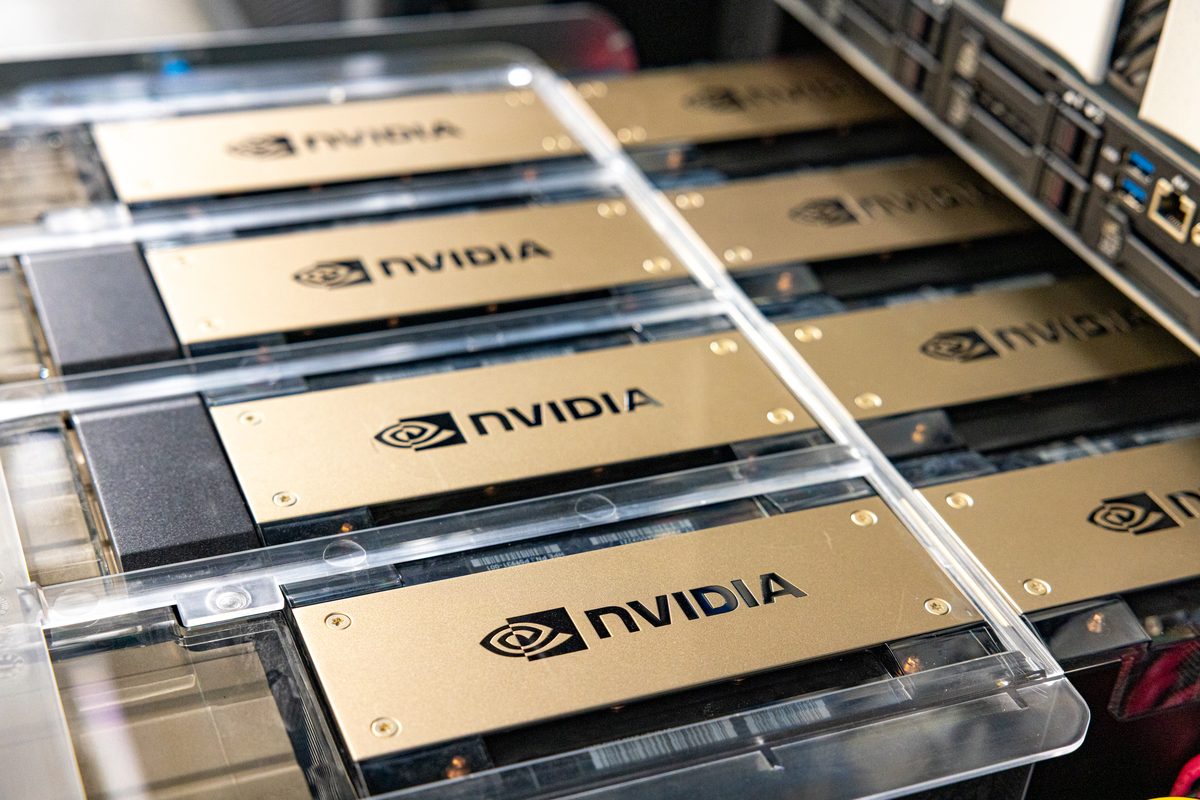
- GPUs: 38 NVIDIA data-center GPUs: 20 H100 80 GB, 16 A100 80 GB and 2 A30 24 GB.
- Compute nodes: eight GPU nodes (HPE Cray XD670 and XD665, HPE ProLiant DL380a Gen11, HPE Apollo 6500 Gen10 Plus and DL385 Gen10 Plus v2) with 512 CPU cores, about 7.4 TB of main memory and 2,928 GB of GPU memory in total. The largest node, an HPE Cray XD670, has eight H100 GPUs and 2 TB of memory.
- Network: HDR 200 Gb/s InfiniBand between the nodes.
- Storage: about 120 TB of shared all-flash parallel storage.
- Software: the Slurm workload manager, containers with Apptainer and NVIDIA NGC images, environment modules, Jupyter notebooks, MATLAB, Miniforge, PyTorch, TensorFlow, the CUDA Toolkit, and an Open OnDemand web portal.
- Funding: Star was built in two phases. The second phase, which added the H100 nodes, was funded by the National Science Foundation’s Major Research Instrumentation program (NSF award 2320735), in a project led by Edward H. Currie working closely with co-investigators in chemistry, physics and astronomy, computer science and biology.
Facility
- Three 30 kW in-row cooling units, an 80 kW UPS and a backup generator.
- Four 48U equipment racks with a combined load of up to 80 kW.
- Faculty research servers, including a server with high-end NVIDIA GPUs.
Access & Help
- Visiting: Contact the department to arrange a tour.
- Virtual machines: The Virtual Machine FAQ and the guide on how to access your VM explain how to connect. Linux VMs are reached with SSH. VMs can also be reached through Remote Desktop, or through the vSphere Client and VMware Remote Console, where you can open the console, take snapshots and power your VM on or off.
- Star accounts: Apply online through the Star website. After approval you can connect by SSH or through the Open OnDemand web portal, on campus or over a VPN.
- Star help: Help is available through the Star documentation, a GitHub issue tracker, the Star Discord server, and [email protected].